
Potential Evidence Confusion
Factual queries can retrieve opposing allegations or legal argument alongside factual records without making the difference obvious.


Counsel faced a complex matter with a mixed evidentiary record of approximately 100K items. Traditional Boolean review could not clear the volume within the litigation timeline, while the mixture of source types meant allegations and legal argument could contaminate factual searches.
Litigation counsel and the client needed a private, source-traceable e-Discovery capability for deposition and trial milestones within a fixed litigation clock and protective-order constraints.
InteliGems took direct operating responsibility for designing, configuring, and validating the review workflow, from source ingestion and classification through querying, connection mapping, and accountable return to counsel.
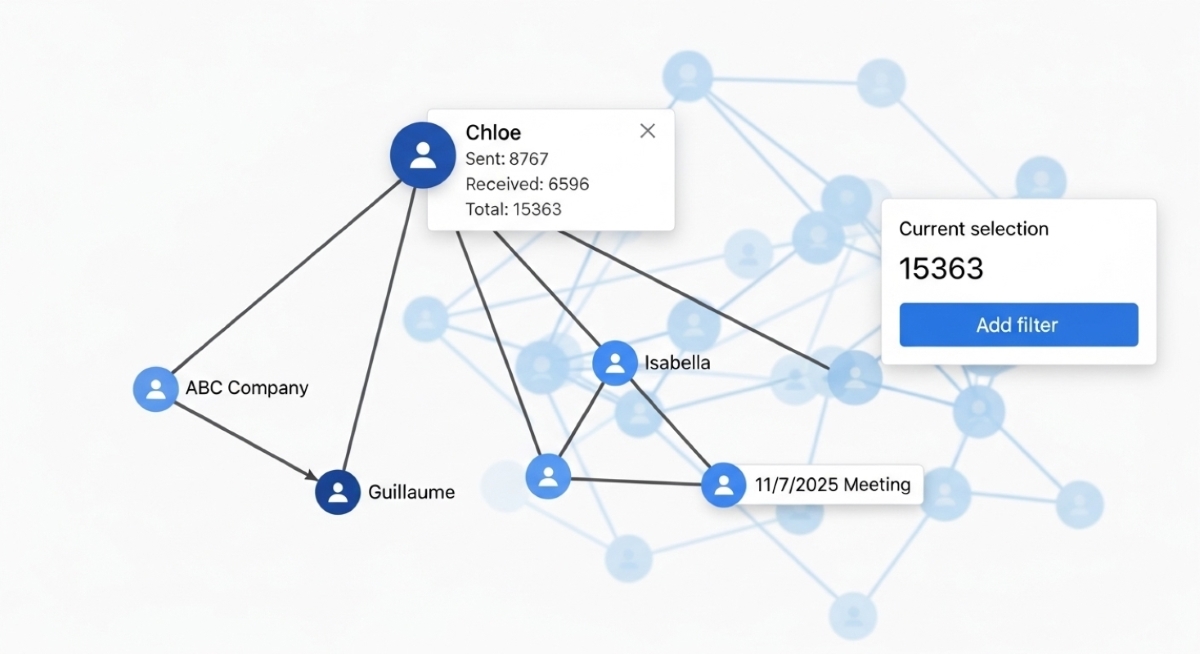
"InteliGems relationship mapping uncovered a pattern of communication we would have otherwise missed, which became the cornerstone of our successful motion. —Litigation Partner"
Private AI accelerated evidence review and source-linked drafting while counsel retained privilege, production, verification and final-use decisions.
When pleadings, discovery productions, testimony, and work product are retrieved as one pool, the system can return confident answers on the wrong evidentiary basis. Source segmentation made that distinction governable before results reached counsel.
Factual queries can retrieve opposing allegations or legal argument alongside factual records without making the difference obvious.
Explicit source categories let counsel exclude pleadings from factual queries, then bring them back into scope when comparing allegations against the underlying record.
Project records classify the measures below as achieved operating results from the engagement. The citation attribution measure in the mandate was an acceptance target and is not presented as an achieved result here.
94% reduction in documented first-pass review time.
85% reduction in the documented privilege mis-tag rate.
70% reduction in documented paralegal review hours.
Documented annual software and SaaS spend removed from the review workflow.
The value was not limited to faster retrieval. The review workflow produced structured, inspectable work products that counsel could verify against native source material and use in case preparation.
The engagement shows how a litigation team can materially change the cost and time profile of high-stakes review while keeping evidentiary context, privilege, production, verification and final-use decisions under counsel control.
Project records document a 94% reduction in first-pass review time, an 85% reduction in privilege mis-tags, a 70% reduction in paralegal review effort, and annual software and SaaS spend reduced from $120,000 to $0.
Those results occurred within a workflow that segmented sources by evidentiary meaning, linked material outputs back to native documents, operated within protective-order constraints, and kept legal determination with counsel.
When important decisions need operating experience, get principal-led support.

Principal-led advisory and operating leadership for executive teams facing consequential AI, governance, transformation, commercialization, and recovery mandates.
 advisory@inteligems.io


