Jan 14 · 2025 · Multi agent + XAI
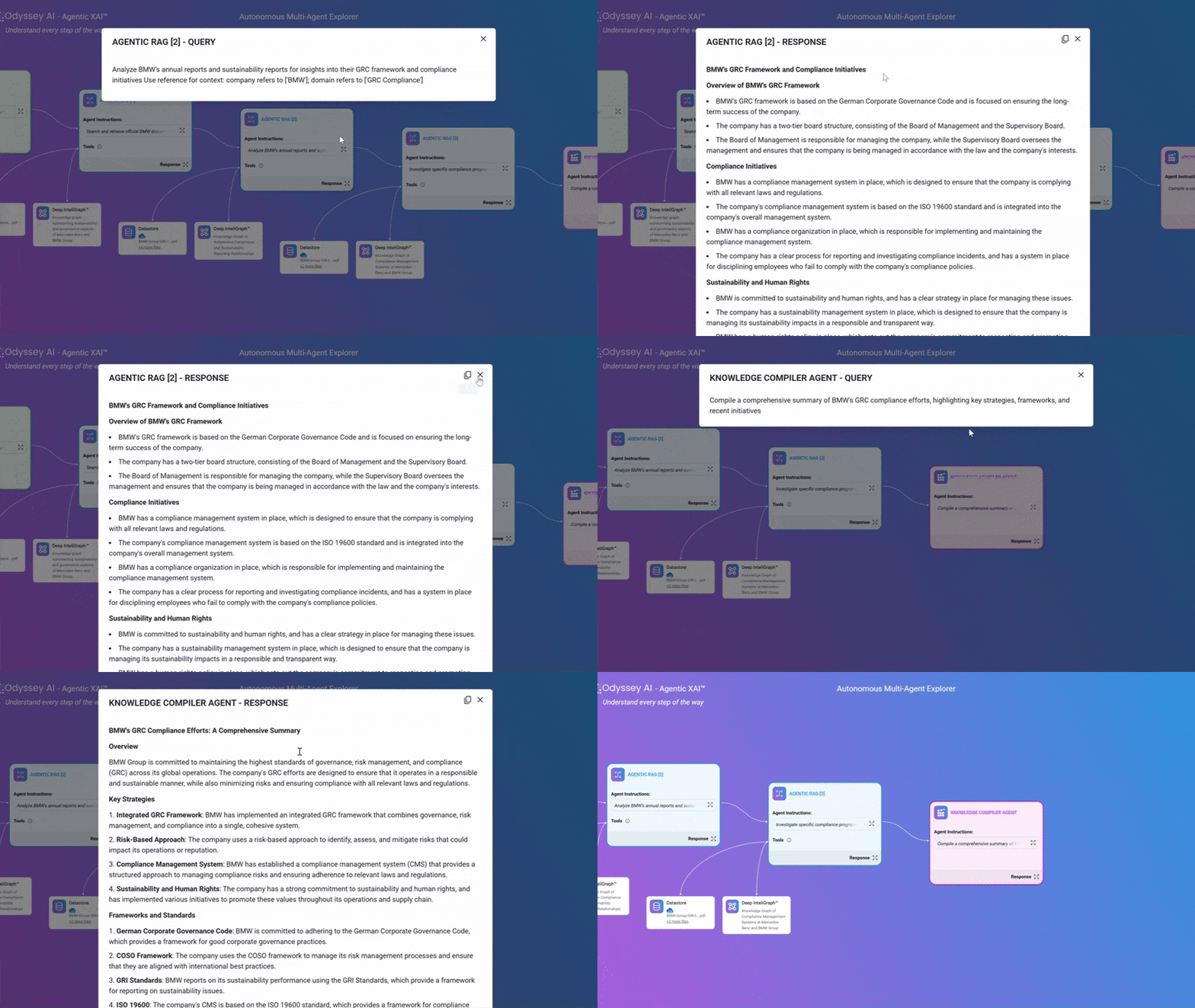
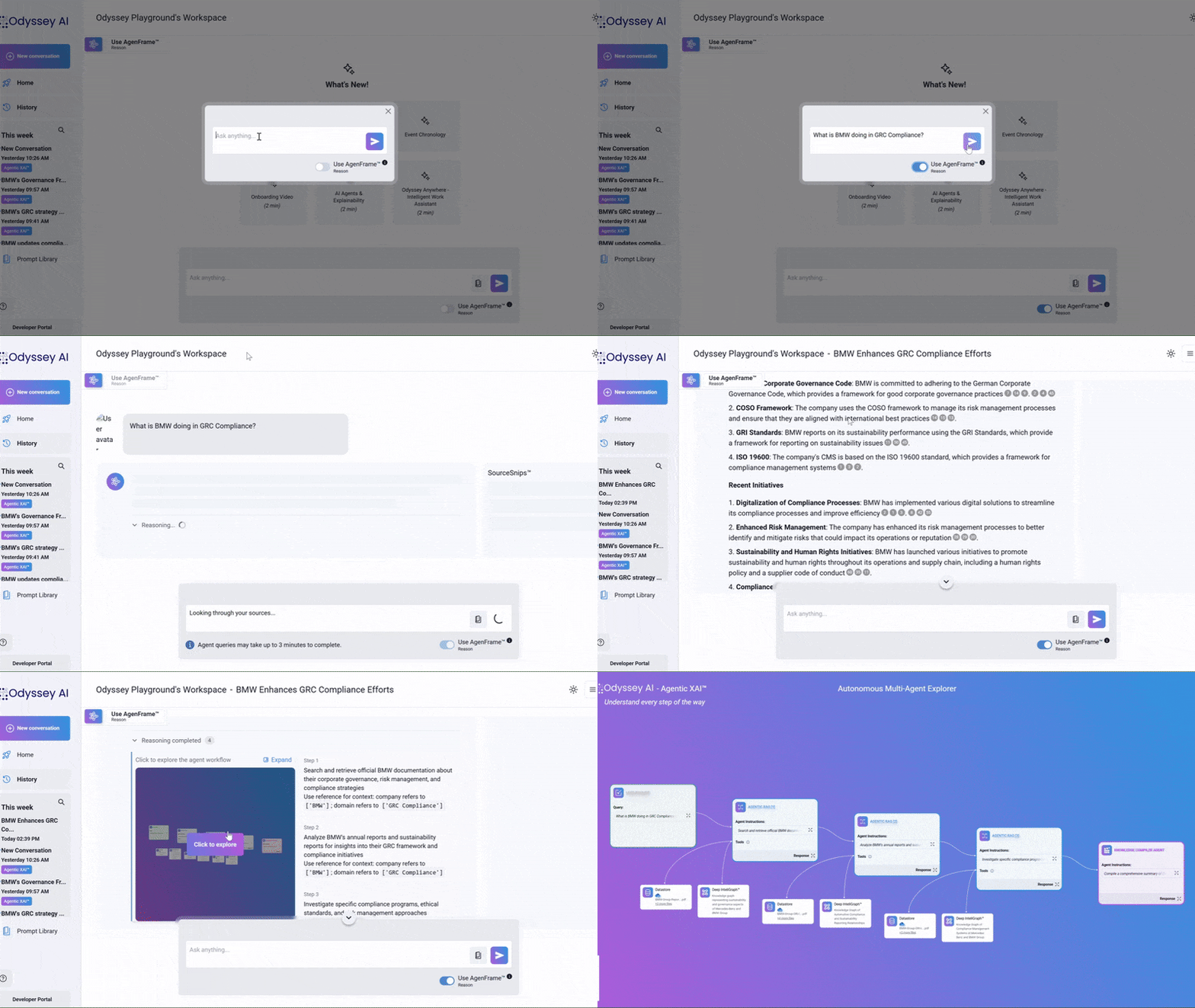
AgenFrame + Agentic XAI
Summary: Explainable multi agent system for compliance with visual audit trails of reasoning, sources and intermediate outputs.
Accomplishment: Made multi agent coordination and explainability visible as a product feature.
Why it mattered: Made coordination and explainability visible as product capabilities for accountable workflows.
Read press release ↗
Feb 19 · 2025 · Interactive product
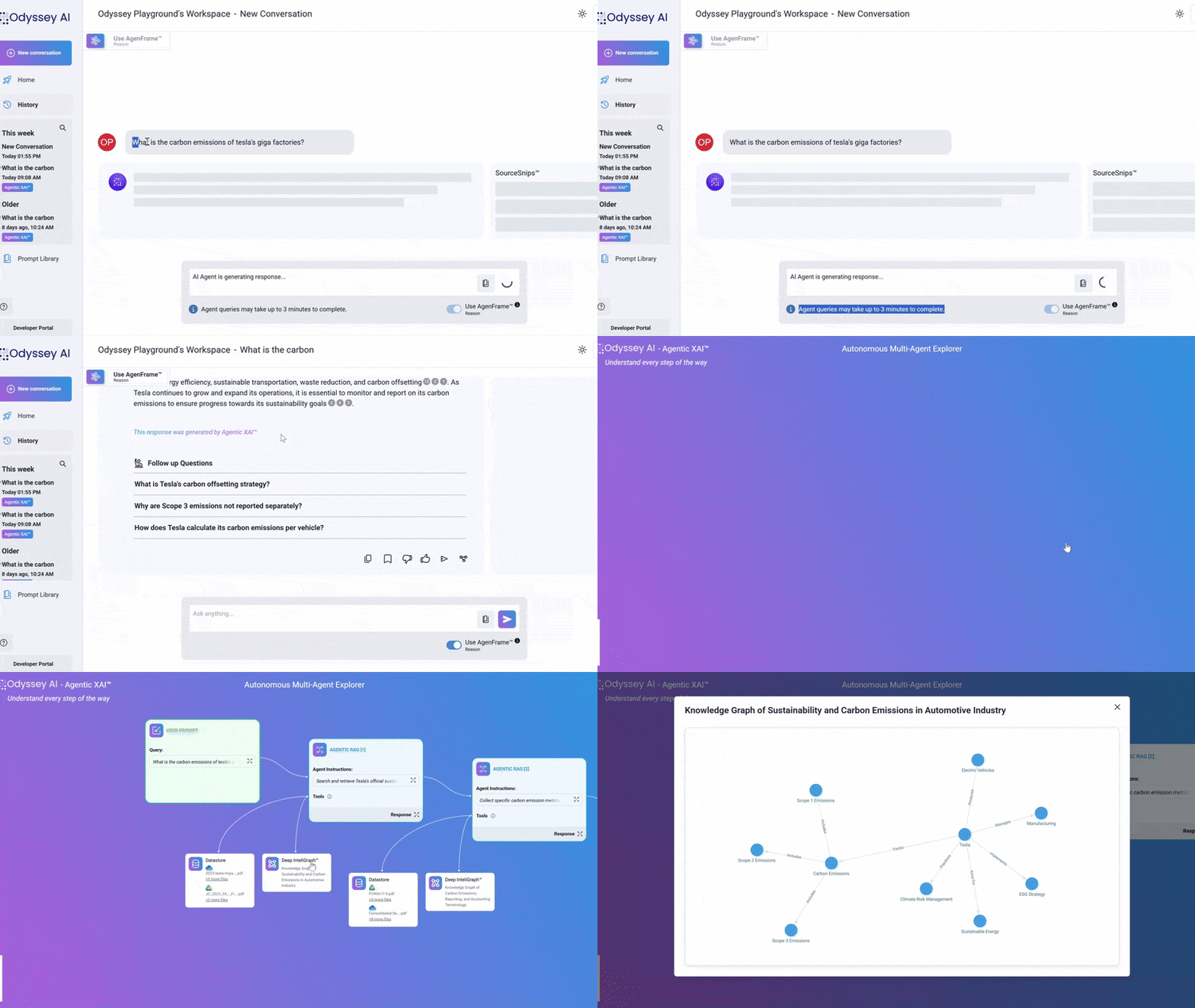
Compliance Demo Playground
Summary: Public playground introduced to demonstrate Odyssey AI agentic compliance workflows across regulated industries.
Accomplishment: Turned the product story into a self guided interactive experience.
Why it mattered: Gave compliance, legal and risk buyers a self-guided way to inspect how the AI reached an answer by reviewing agent reasoning, confidence, knowledge relationships and cited source evidence before deployment.
Read announcement ↗
Feb 27 · 2025 · Knowledge graph
Deep InteliGraph
Summary: Graph based contextual enrichment, multi hop reasoning and visual relationship discovery added to Odyssey.
Accomplishment: Expanded the platform beyond retrieval into relationship discovery and contextual reasoning.
Why it mattered: Extended the knowledge architecture from retrieval toward relationship-aware context and reasoning.
Read product update ↗
Jun 2025 · AI assurance methodology
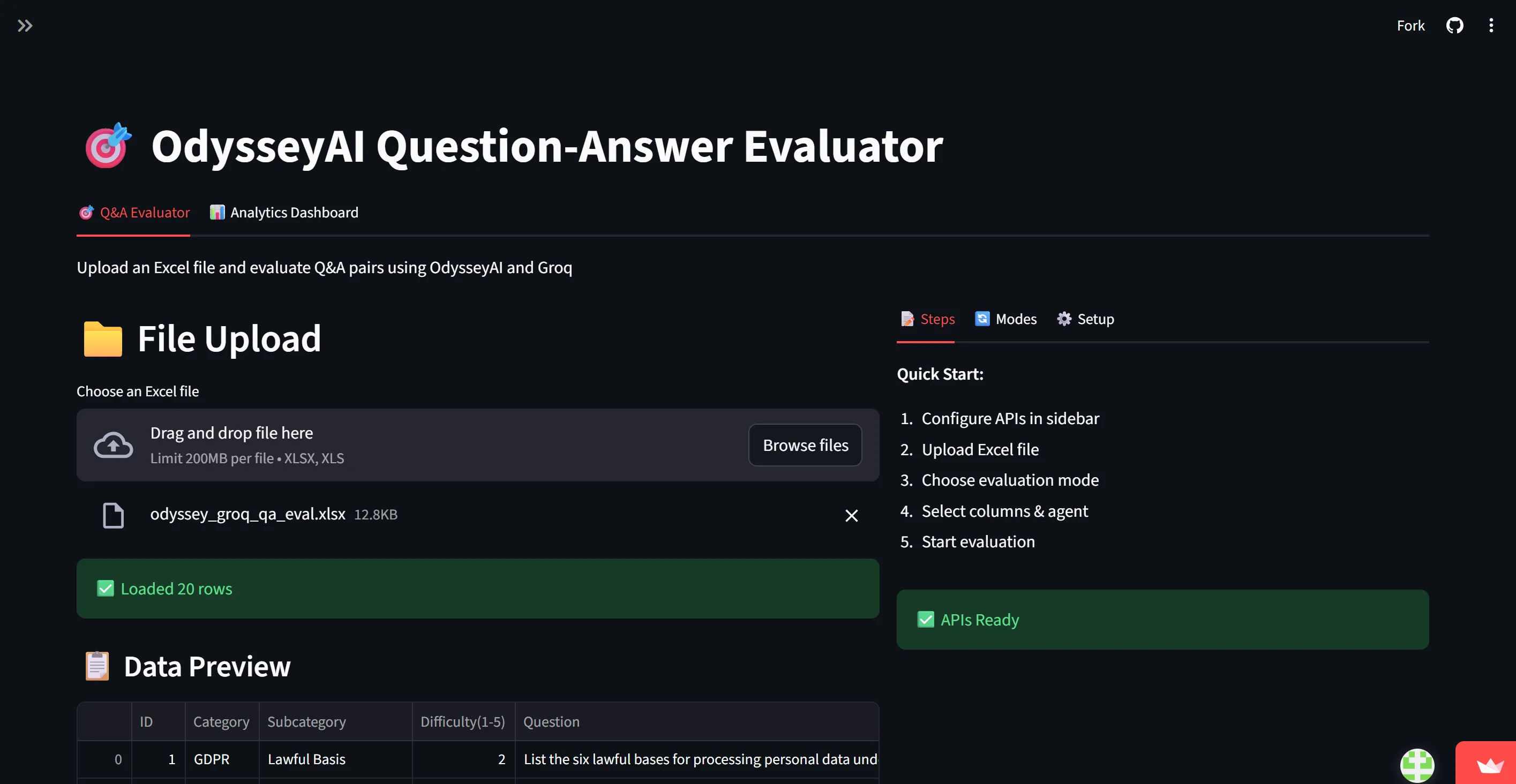
QA evaluation workflow documented
Summary: Internal QA documentation established Criteria Mode and Comparison Mode for batched prompt and agent evaluation, with configurable agent versions, mapped parameters, scored explanations and CSV reporting.
Accomplishment: Formalized a repeatable quality-assurance method before the later public QA Evaluator product update.
Why it mattered: Formalized a repeatable assurance method before the later public productization of QA evaluation.
Sep 2025 · Major platform release
Odyssey AI 3.0
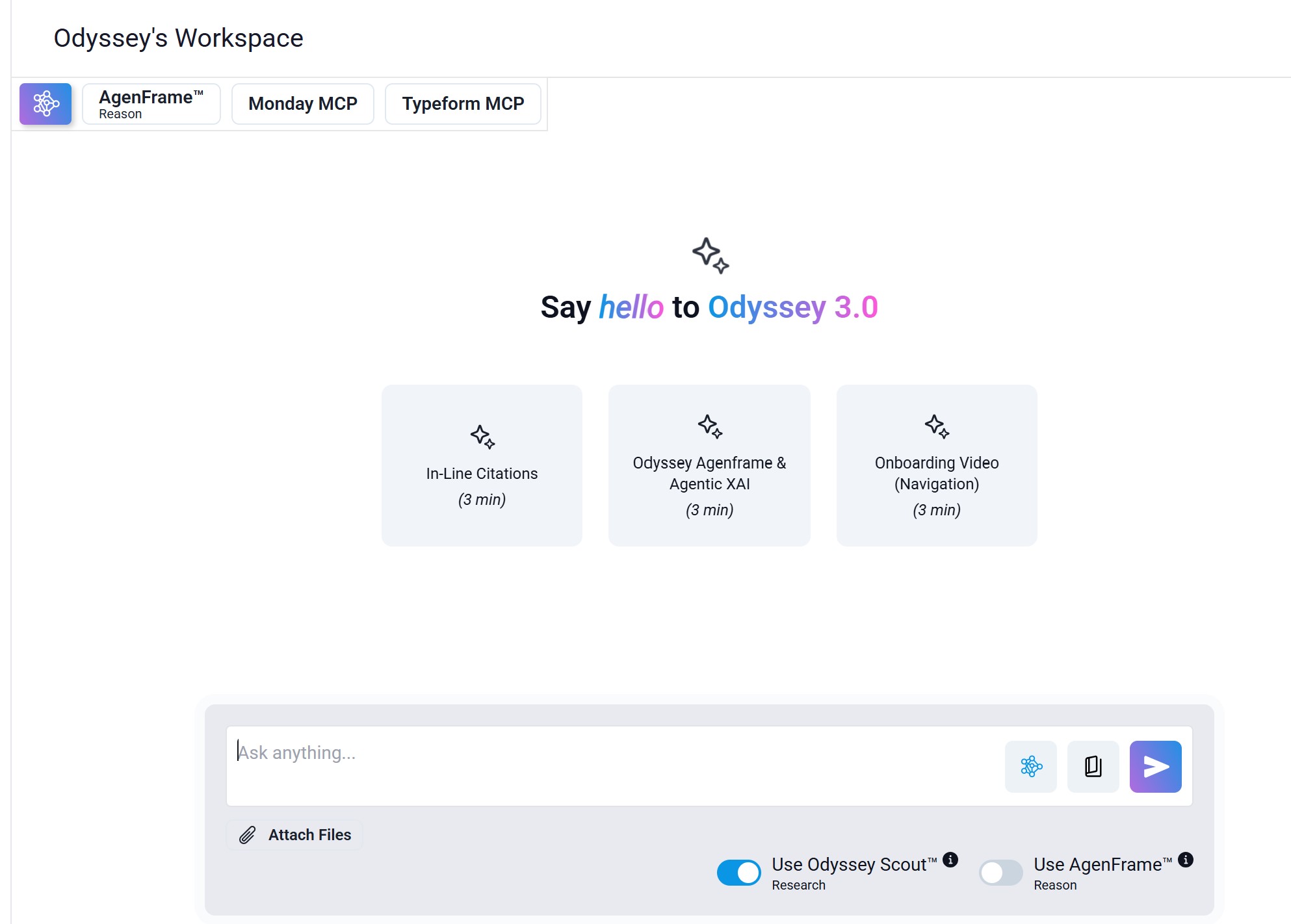
Summary: Major redesign with deeper MCP tooling, visual agent building, HITL queue management, analytics, governed datasets and multi model switching.
Accomplishment: Consolidated Odyssey into a more complete governed AI operating platform.
Why it mattered: The CEO/product-strategy mandate consolidated tooling, HITL, analytics and governed datasets into a more complete enterprise operating platform.
Read release update ↗
Oct 2025 · Operating system
Agent Fleet v2.0
Summary: Governance first multi agent operating model built on Odyssey 3.0 with dataset targeting, Control Tower, HITL, SoD and evidence by default.
Accomplishment: Packaged the multi agent system into a clearer enterprise operating model.
Why it mattered: Turned governance concepts into operating controls: dataset targeting, human review, separation of duties, confidence scoring and evidence were built into the execution path.
Read product deep dive ↗
Nov 2025 · Governed web research
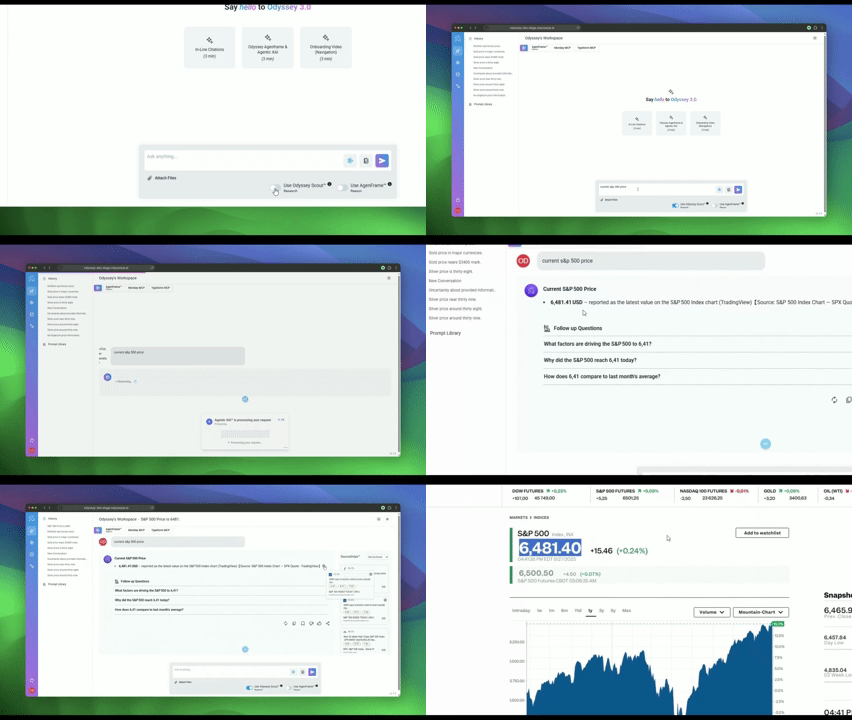
Odyssey Scout
Summary: Governed live web research for agents with policy gated browsing, SourceSnips citations and exportable evidence packs.
Accomplishment: Extended governed evidence collection beyond internal data into the live web.
Why it mattered: Extended governed evidence collection beyond internal data while preserving source-linked outputs.
Read product update ↗
Nov 14 · 2025 · Public AI assurance update
QA Evaluator
Summary: Public QA Evaluator update built on a documented two-mode assurance workflow: Criteria Mode for source-grounded scoring without a required reference answer, and Comparison Mode for expected-versus-predicted evaluation with configurable criteria and weights.
Accomplishment: Productized repeatable output evaluation, agent/configuration comparison and exportable QA evidence for review and validation.
Why it mattered: Consolidated output evaluation, configuration comparison and exportable QA evidence into a repeatable assurance workflow.
Read product update ↗